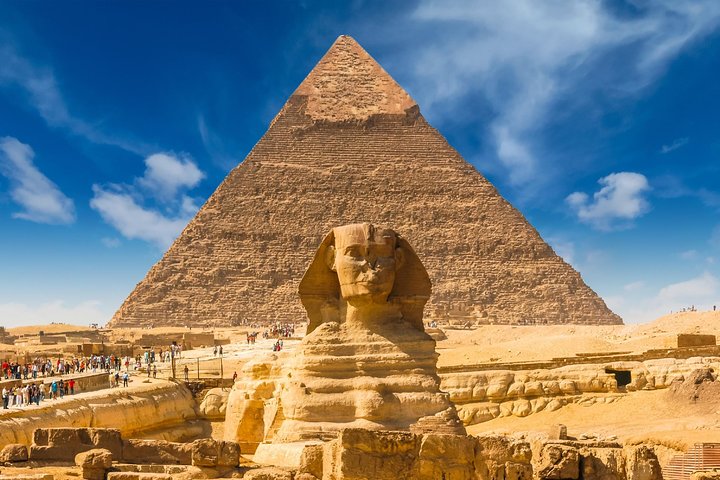


Saqqara Tours: Complete Guide to the World’s Oldest Pyramid
Saqqara is an ancient Egyptian necropolis located approximately 30 kilometres south of Cairo, home to the Step Pyramid of Djoser — the world’s oldest stone pyramid, built around 2630 BCE — and a vast complex of mastaba tombs, mortuary temples, and the Imhotep Museum. Designed by the architect Imhotep nearly 5,000 years ago, the Step Pyramid was the prototype for every pyramid that followed, including those at Giza. Tours from Cairo typically combine Saqqara with the older capital of Memphis and often the Bent and Red Pyramids of Dahshur. Half-day Saqqara visits cost USD $40–70 per person; full-day combined tours with Giza or Dahshur run USD $58–120. Entry to the Saqqara complex in 2026 is approximately 450–1,000 EGP (USD $15–32) depending on access level.
Quick Facts: Saqqara at a Glance
- Location: Saqqara, ~30 km south of Cairo, ~20 km south of the Giza Plateau
- Travel time from Cairo: 45–75 minutes by road
- Opening hours: 8:00 AM – 5:00 PM, daily (last entry 4:00 PM)
- Entry fee (2026): ~450–1,000 EGP (USD $15–32) including the Step Pyramid, Imhotep Museum, and select tombs
- Key structure: Step Pyramid of Djoser (62 m tall, six tiers, ~2630 BCE)
- Architect: Imhotep — Egypt’s first known named architect and physician
- Necropolis area: ~7 km long and 1.5 km wide, spanning Egypt’s First Dynasty to the Greco-Roman period
- Other major pyramids: Pyramid of Unas, Pyramid of Teti, Pyramid of Userkaf
- UNESCO World Heritage Site: Yes, as part of the Memphis and its Necropolis listing (1979)
- Payment: Card-only at official ticket gates as of 2026
What Is Saqqara and Why Take a Tour?
Saqqara was the principal necropolis of Memphis, Egypt’s first capital, and remained in continuous funerary use for more than 3,000 years — longer than the entire history of any subsequent civilisation. The Step Pyramid of Djoser, completed around 2630 BCE, marks the architectural moment when Egyptian funerary monuments transitioned from mudbrick mastabas to stacked stone — the engineering breakthrough that made the Giza pyramids possible a century later.
The site contains 11 royal pyramids (most of them now ruined), hundreds of private mastaba tombs, the Serapeum (a vast underground gallery used for the burial of sacred Apis bulls), the Imhotep Museum, and active excavation areas where major discoveries continue to emerge. In the past five years alone, Saqqara has yielded sealed wooden coffins from the 26th Dynasty, more than 250 mummies, 150 bronze statues, and previously unknown tombs of senior officials.
A guided tour matters at Saqqara for a different reason than at Giza. The site is enormous, sparsely signposted, and far less obviously “famous” than the Giza Plateau — meaning unguided visitors typically miss the most rewarding tombs, which require a guide with local knowledge to locate and interpret. The Imhotep Museum is the best starting point for context, and the Tomb of Mereruka, the Tomb of Kagemni, and the Pyramid of Unas (with the world’s oldest religious texts inscribed on its walls) reward visitors who know which doors to open.
Where Is Saqqara and How Do You Get There?
Saqqara sits in the desert escarpment on the west bank of the Nile, in the village of Saqqara, about 30 kilometres south of central Cairo. It is rarely visited as a standalone destination — most tours combine it with Memphis (10 km away), the Giza Plateau, or the pyramids of Dahshur (10 km further south).
Three transport options are practical:
- Guided tour from Cairo: The standard format. Hotel pickup, Egyptologist guide, vehicle, and entry fees combined. Travel time 45–75 minutes each way. Almost always includes Memphis and frequently Dahshur or Giza.
- Private taxi or Uber: Approximately 400–600 EGP each way. Practical for self-guided visitors but you arrive without expert interpretation and the site is too spread out to walk.
- Independent rental car: Possible for confident drivers familiar with Egyptian traffic. Rare among international visitors.
The vast majority of Saqqara visits happen as part of a “Three Pyramid Sites” tour — Giza, Saqqara, and Dahshur — or a “Saqqara and Memphis” half-day combination from Cairo.
The Best Saqqara Tours from Cairo
Saqqara is most commonly booked as part of a multi-site itinerary. Options fall into five categories.
Saqqara + Memphis Half-Day Tours
Pickup mid-morning, 4–5 hours covering the Step Pyramid complex, the Imhotep Museum, the Pyramid of Unas, and the open-air museum at Memphis (with the colossal statue of Ramses II). Typically USD $40–70 per person including transport, guide, and tickets.
Giza + Saqqara + Memphis Full-Day Tours
The most-booked format for first-time visitors to Cairo. Combines the famous Giza pyramids with the older, less-crowded Saqqara complex and the original capital at Memphis. USD $58–95 per person for shared groups, USD $120–200 per group for private. Total duration 8–10 hours.
Saqqara + Dahshur Tours
Pairs Saqqara with the Bent Pyramid and Red Pyramid at Dahshur — the engineering experiments that immediately preceded Khufu’s Great Pyramid. The Red Pyramid permits interior climbing without an additional fee. USD $50–90 per person. The most archaeologically focused option.
Three-Pyramid Site Tours (Giza + Saqqara + Dahshur)
The complete “evolution of the pyramid” full-day itinerary, covering 1,500 years of architectural development in a single day. USD $80–150 per person shared, USD $200–350 per group private. Long but exceptional for archaeology-focused travellers.
Private Egyptologist-Led Tours
Customised itineraries with a Ministry-licensed Egyptologist guide. Pace and stops adjusted to your interests. USD $150–300 per group. The right choice for repeat visitors, photographers, or anyone wanting access to less-visited tombs.
What You’ll See on a Saqqara Tour
The Step Pyramid of Djoser
The world’s oldest stone pyramid, completed around 2630 BCE for Pharaoh Djoser of the Third Dynasty. Designed by Imhotep, who stacked six progressively smaller mastabas to create a 62-metre stepped monument that became the largest human-made structure of its time. Originally clad in white limestone. Following major conservation work completed in 2020, visitors can again enter the underground burial chambers — a 28-metre shaft that descends to Djoser’s granite sarcophagus.
The Imhotep Museum
A modern on-site museum opened in 2006 and named for the Step Pyramid’s architect. Houses artefacts excavated at Saqqara across two centuries: mummies, sarcophagi, statues, surgical instruments, and the construction tools used to build the pyramid. Most tours start here for context.
The Step Pyramid Complex
The pyramid sits inside a 15-hectare ceremonial enclosure ringed by a 10.5-metre limestone wall with 13 false doors and a single real entrance in the southeast corner. Inside the wall: the South Court (used for the Heb-Sed jubilee rituals), the Serdab Chamber housing a statue of Djoser, the entrance colonnade with 32 ribbed limestone columns — among the oldest surviving architectural columns in the world.
The Pyramid of Unas
A modest 43-metre pyramid completed around 2345 BCE. Its archaeological importance vastly exceeds its size: the interior burial chamber walls are inscribed with the Pyramid Texts — the oldest religious writings ever discovered, predating the more famous Book of the Dead by nearly a thousand years.
The Tomb of Mereruka
The largest non-royal tomb at Saqqara, built for the vizier Mereruka under King Teti. Thirty-three rooms decorated with extraordinarily preserved reliefs depicting daily life, hunting scenes, and craft production. Often described as the finest Old Kingdom tomb open to visitors.
The Tomb of Kagemni
Another vizier’s tomb, smaller than Mereruka’s but with comparable relief quality. The hippopotamus and crocodile hunting scenes are among the most photographed images from Old Kingdom Egypt.
The Serapeum
A vast underground gallery cut into the bedrock containing 24 colossal granite sarcophagi (some weighing 70 tonnes) used for the burial of mummified Apis bulls — sacred animals associated with the god Ptah. Reopened to visitors after extensive restoration. Its scale alone justifies the visit.
Can You Go Inside the Step Pyramid?
Yes. After major conservation completed in 2020 — partly in response to earthquake damage — the underground chambers of the Step Pyramid reopened to visitors. The descent through internal corridors leads to the central burial shaft and the granite sarcophagus chamber. Climbing the exterior, as at all Egyptian pyramids, is strictly prohibited.
The Pyramid of Unas can also be entered via a sloping passage to the burial chamber, where visitors can read the original Pyramid Texts inscribed in vertical columns of hieroglyphs on the chamber walls.
When to Visit Saqqara
Best months: October to April. Daytime highs of 18–25°C with low humidity. May–September brings 35–40°C heat across an open desert site with no shade.
Best time of day: Mid-morning. The site opens at 8:00 AM but receives far fewer visitors than Giza, so crowd avoidance is rarely the deciding factor. Arriving around 9:30–10:00 AM after most Giza-bound tour buses have departed gives the best balance of light, temperature, and quiet.
Days to avoid: Fridays. Local visitor numbers spike on the Egyptian weekend.
Practical Tips for Visitors
- Card payment: As of 2026, ticket gates accept cards only. Cash is no longer accepted at the main entrance.
- Cash for vendors: Carry small Egyptian pound notes for guards (small tips for unlocking specific tombs are customary), restrooms, and the on-site cafeteria.
- Bring a torch: Phone flashlights are sufficient for the tomb interiors, but a dedicated torch makes the relief details visible.
- Footwear: Closed-toe shoes with grip. Surfaces are sandy and uneven.
- Sun protection: No shade. Wide-brimmed hat, sunscreen, sunglasses.
- Water: At least 1.5 litres per person. The on-site cafeteria has limited supplies.
- Tomb access varies: Not every tomb is open every day. A licensed guide knows which are accessible and can negotiate access to less-visited tombs.
How Much Does a Saqqara Tour Cost?
Approximate 2026 pricing per person, all-in:
- Saqqara + Memphis half-day tour: USD $40–70
- Giza + Saqqara + Memphis full-day tour: USD $58–95
- Saqqara + Dahshur full-day tour: USD $50–90
- Three-Pyramid Sites full-day tour: USD $80–150
- Private Egyptologist tour: USD $150–300 per group
- DIY: Saqqara entry only: ~450–1,000 EGP (USD $15–32) depending on access tier
The standard Saqqara entry covers the Step Pyramid complex, the Imhotep Museum, and the main accessible tombs. The Serapeum and certain elite tombs sometimes require a separate ticket.
Why a Guided Tour Beats Doing It Yourself
The argument for a guide is stronger at Saqqara than at Giza. The site is harder to navigate, far less self-explanatory, and the most rewarding features — the Pyramid Texts, the relief details in the noble tombs, the architectural innovations in the Djoser complex — require informed interpretation to register at all. The Egyptologist’s commentary turns Saqqara from “more pyramids” into the moment Egyptian civilisation invented monumental stone architecture. Without that context, many independent visitors leave wondering why the site is famous.
Frequently Asked Questions
How old is the Step Pyramid of Djoser?
Approximately 4,650 years old. It was completed around 2630 BCE during Egypt’s Third Dynasty, making it the oldest stone pyramid in the world and the oldest large-scale stone building on Earth.
Who built the Step Pyramid?
The pyramid was commissioned by Pharaoh Djoser and designed by his vizier and architect Imhotep — Egypt’s first named architect, later deified as the god of medicine and wisdom. Imhotep’s innovation of stacking mastabas created the prototype for all subsequent Egyptian pyramids.
Is Saqqara worth visiting?
Yes. Saqqara is older, less crowded, and arguably more archaeologically significant than Giza, with continuous excavation producing major new discoveries every year. For travellers with more than one day in Cairo, skipping Saqqara means skipping the origin point of pyramid architecture.
How does Saqqara compare to Giza?
Giza holds the three most famous pyramids and the Great Sphinx, built between 2580 and 2510 BCE. Saqqara is older — its Step Pyramid predates Giza by about a century — and far broader in scope, covering 3,000 years of Egyptian funerary practice in a single necropolis. Most visitors include both in their Cairo itinerary.
Can you go inside the Step Pyramid?
Yes. After conservation completed in 2020, visitors can descend through the underground corridors to the central burial shaft and granite sarcophagus chamber. This was not possible for most of the previous decade.
How long does a Saqqara tour take?
A focused Saqqara visit takes 2–3 hours on-site. Combined Saqqara-Memphis tours run 5–6 hours with travel. Three-pyramid-site full-day tours covering Giza, Saqqara, and Dahshur run 9–11 hours.
What is the Serapeum at Saqqara?
An underground temple complex built for the burial of mummified Apis bulls — sacred animals worshipped as living incarnations of the god Ptah. Twenty-four colossal granite sarcophagi line the corridors, some weighing 70 tonnes. It reopened to visitors after restoration and is one of the most atmospheric experiences at the site.
Is Saqqara safe to visit?
Yes. The site has dedicated Tourist Police and the surrounding desert area is quiet and well-controlled. Standard travel precautions apply for navigating the journey from Cairo.
What are the Pyramid Texts?
Religious inscriptions carved on the interior walls of the Pyramid of Unas at Saqqara around 2345 BCE — the oldest known religious writings in the world. They later evolved into the Coffin Texts and ultimately the Book of the Dead.
Can children visit Saqqara?
Yes. Children under 6 enter free at most sites. The walking distances are shorter than at Giza but still significant; the tomb interiors involve narrow passages and dim lighting that suit older children better than toddlers.
Booking Your Saqqara Tour
Saqqara is the archaeological complement to Giza — older, quieter, and home to the architectural breakthrough that made the famous pyramids possible. For first-time visitors to Egypt, the optimal format is a full-day combined tour pairing Giza in the morning with Saqqara and Memphis in the afternoon, delivering the complete Old Kingdom story in a single day. For travellers with deeper archaeological interest, a Saqqara-Dahshur or three-pyramid-site tour reveals the full evolution of pyramid construction, from Imhotep’s experimental stacked mastabas to the geometric perfection of the Great Pyramid.